Why Oracle RAC Remains Relevant in 2026
Database administration has evolved significantly over the past decade. In 2026, organizations expect DBAs to handle high availability, scalability planning, performance tuning, and zero-downtime architecture. Traditional single-instance database knowledge is no longer enough for enterprise environments.
This is where Oracle Real Application Clusters (Oracle RAC) becomes strategically important. Oracle RAC remains one of the most relevant high-availability database technologies in large enterprises. Despite cloud expansion and containerization trends, RAC continues to power mission-critical systems across banking, telecom, healthcare, and government sectors.
The Changing Role of a DBA in 2026
Earlier, a DBA’s responsibilities focused on backups, patching, and monitoring. Today, companies demand professionals who can design resilient infrastructure capable of handling system failures without business interruption.
Modern enterprises require:
- Continuous uptime
- Horizontal scalability
- Fault tolerance
- Load balancing across nodes
A DBA who understands clustering technologies such as Oracle RAC is positioned differently from one who manages only standalone databases.
What Makes Oracle RAC Still Relevant?
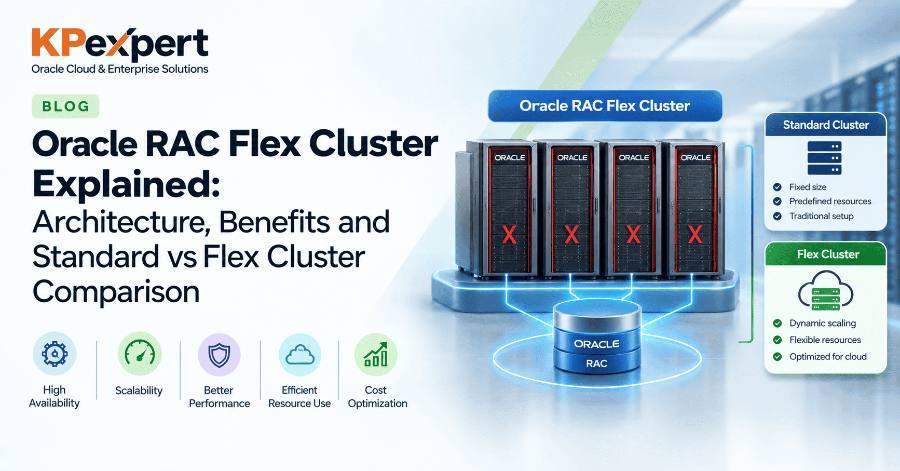
Oracle RAC allows multiple servers (nodes) to run a single Oracle database simultaneously using shared storage. This active-active architecture ensures that even if one node fails, others continue processing transactions.
Key architectural components include:
- Clusterware
- Automatic Storage Management (ASM)
- SCAN listeners
- Cache Fusion mechanism
- Voting disks and OCR
Unlike passive disaster recovery systems, Oracle RAC ensures real-time availability. Many enterprises combine RAC with Data Guard to build layered protection strategies.
The demand for Oracle RAC skills continues because business-critical systems cannot tolerate downtime measured even in minutes.
Why Oracle RAC Skills Are in High Demand in 2026
1. Enterprise Dependency on Oracle Databases
Large ERP and financial systems are still built on Oracle databases. Migrating these systems is costly and risky. As a result, RAC-based environments remain operational for long-term infrastructure stability.
2. Hybrid Infrastructure Growth
Many companies operate hybrid models combining on-premise infrastructure with Oracle Cloud. Oracle RAC integrates efficiently into such ecosystems, requiring DBAs who understand both clustering and cloud networking.
3. Limited Skilled Professionals
Oracle RAC is complex. It involves networking configuration, storage design, interconnect tuning, and troubleshooting node evictions. Because fewer professionals specialize in RAC, demand often exceeds supply.
4. Strict Uptime Requirements
Industries such as BFSI and telecom operate 24/7. Even short outages cause revenue loss and reputational damage. RAC provides the active-active architecture required for such environments.
How Oracle RAC Future-Proofs a DBA Career
Future-proofing does not mean following trends. It means developing skills that remain valuable regardless of technology shifts. Oracle RAC supports long-term career stability in several ways.
Career Advancement
DBAs with RAC expertise often move into roles such as:
- Senior Oracle DBA
- High Availability Architect
- Database Infrastructure Lead
- Performance Tuning Specialist
These roles involve architecture planning rather than routine maintenance.
Higher Compensation
Oracle RAC administrators typically earn more than core DBAs because they handle critical production systems. Organizations compensate expertise that reduces business risk.
Global Opportunities
Oracle-based enterprise systems operate worldwide. RAC knowledge enhances eligibility for roles in multinational organizations and consulting assignments.
Oracle RAC vs Data Guard: Common Confusion
- Oracle Data Guard focuses on disaster recovery (primary + standby).
- Oracle RAC provides real-time active clustering.
Data Guard protects against site-level failure, while RAC ensures application-level uptime. Enterprises often use both, but RAC remains essential for continuous availability.
Essential Skills to Learn in Oracle RAC Training
- RAC installation and configuration
- Managing Oracle Clusterware
- ASM disk group management
- Performance tuning in RAC environments
- Troubleshooting node eviction and split-brain issues
- Backup and recovery strategies in clustered setups
- Monitoring through Oracle Enterprise Manager
Hands-on experience is critical. Employers prioritize professionals who have worked in production-like lab environments.
Is Oracle RAC Difficult to Learn?
Oracle RAC requires strong foundational knowledge in:
- Oracle database architecture
- Networking concepts
- Storage configuration
- Linux administration
For experienced DBAs, the learning curve is manageable with structured practice. Beginners may need to build core database fundamentals first.
Frequently Asked Questions (People Also Ask)
Is Oracle RAC still in demand in 2026?
Yes. Large enterprises continue to rely on RAC for high availability and scalability in mission-critical systems.
What is the average salary of an Oracle RAC DBA?
Compensation varies by region and experience. RAC specialists generally earn higher salaries compared to standard Oracle DBAs due to advanced technical expertise.
Should a DBA learn Oracle RAC or cloud-native databases?
Both are valuable. Many enterprises operate hybrid systems, so learning Oracle RAC alongside cloud skills provides better long-term security.
Does Oracle RAC have a future?
Yes. As long as enterprise Oracle databases exist, RAC will remain relevant for high-availability infrastructure.
Final Thoughts
Technology evolves, but enterprise database reliability remains a constant requirement. Oracle RAC continues to play a crucial role in ensuring uptime, scalability, and performance in high-risk business environments.
For DBAs aiming to move beyond operational support into architectural roles, Oracle RAC represents a strategic skill set. In 2026, specialization in clustering and high availability differentiates professionals in a competitive job market.
A DBA who understands Oracle RAC is not just maintaining databases. They are protecting business continuity.