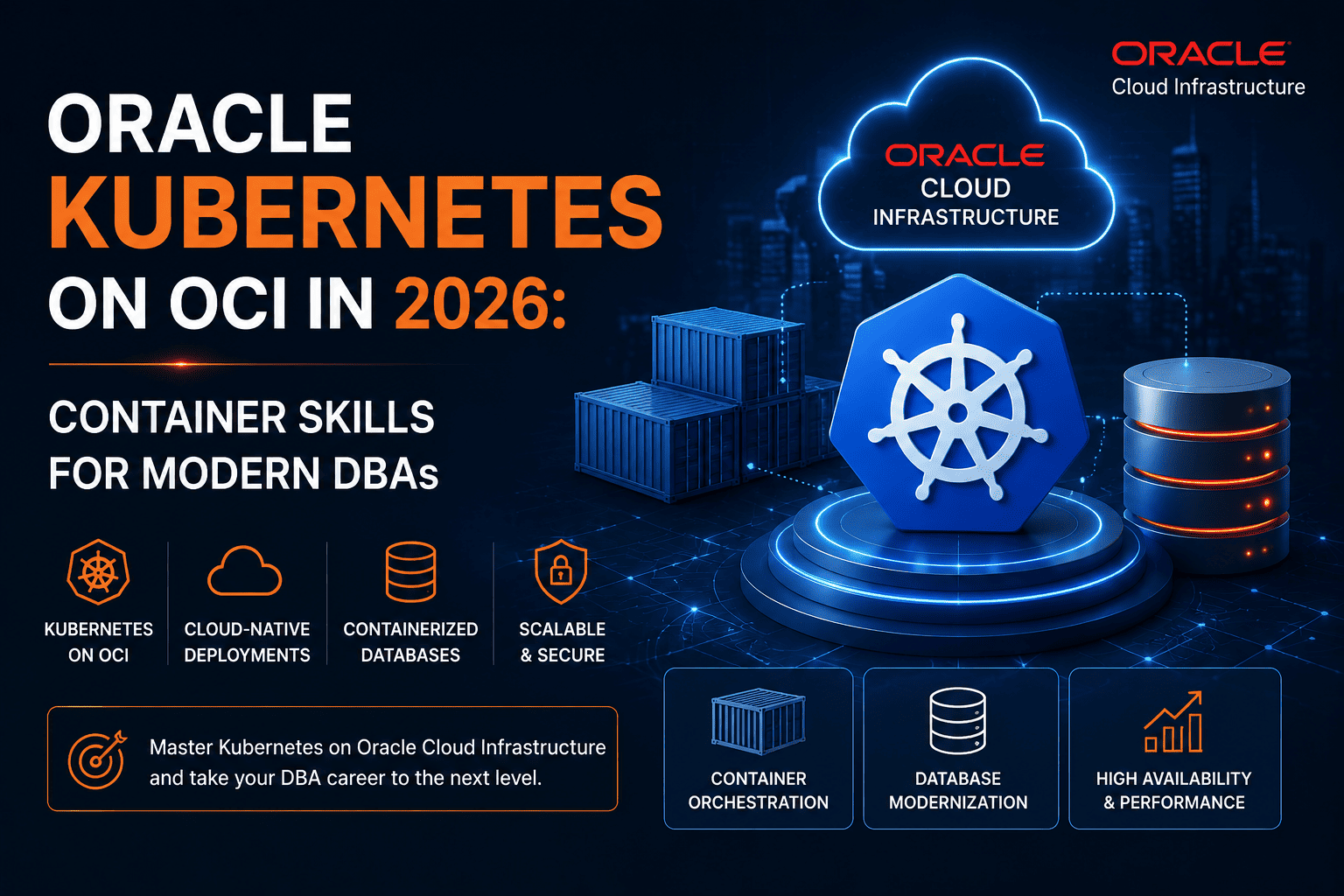
Oracle Kubernetes on OCI in 2026 – Container Skills for Modern DBAs
Container orchestration is no longer exclusive to application development teams. In 2026, DBAs supporting cloud-native middleware, microservices-based applications, and containerized database tooling must understand Kubernetes fundamentals—especially Oracle Kubernetes Engine (OKE) on OCI.
While core database administration remains essential, Kubernetes literacy helps DBAs collaborate with DevOps teams, troubleshoot connectivity issues, and support modern deployment pipelines.
What is Oracle Kubernetes Engine (OKE)?
OKE is Oracle's managed Kubernetes service on OCI. It automates control plane management, integrates with OCI networking and IAM, and enables teams to deploy containerized workloads at scale without managing Kubernetes masters manually.
Why DBAs Should Learn Kubernetes in 2026
1. Cloud-Native Application Stacks
Many enterprise applications connecting to Oracle databases run on Kubernetes. DBAs who understand pods, services, and ingress troubleshoot connectivity faster.
2. Middleware and Tooling Deployment
Monitoring agents, backup utilities, and CI/CD tooling increasingly deploy as containers. Kubernetes knowledge helps DBAs support operational tooling.
3. Career Differentiation
"Cloud DBA with Kubernetes awareness" is a growing job requirement in job postings for senior infrastructure roles.
Key Kubernetes Concepts for DBAs
- Clusters, nodes, and namespaces
- Pods, deployments, and services
- ConfigMaps and Secrets (credential handling)
- Persistent volumes for stateful workloads
- OCI Load Balancer integration with OKE
- Basic kubectl commands for diagnostics
OKE on OCI: Practical Focus Areas
- Creating and accessing OKE clusters via OCI Console
- Configuring VCN networking for worker nodes
- Deploying sample applications and verifying connectivity
- Understanding RBAC and security policies
- Integrating monitoring and logging
How Kubernetes Connects to Other Oracle Skills
Kubernetes knowledge enhances:
- OCI cloud infrastructure management
- Terraform-based cluster provisioning
- DevOps collaboration on database release cycles
- Hybrid architectures spanning VMs and containers
Who Should Take OKE / Kubernetes Training?
- Oracle DBAs moving into cloud-native environments
- OCI engineers supporting platform teams
- DevOps professionals working with Oracle stacks
- Students preparing for cloud infrastructure roles
Frequently Asked Questions
Do DBAs need to become Kubernetes experts?
Not necessarily full platform engineers—but foundational OKE and kubectl skills are increasingly expected for senior cloud-facing DBA roles.
Can Oracle Database run inside Kubernetes?
Oracle offers specific approaches for containerized database deployments; training focuses on when and how containers fit database strategies versus traditional VM/BM deployments.
Should I learn OCI before Kubernetes?
Yes. OCI networking and IAM fundamentals make OKE training significantly easier.
Conclusion
Oracle Kubernetes training on OCI in 2026 prepares database professionals for modern infrastructure teams. By combining Core DBA, OCI, and container skills, professionals build a versatile profile suited for enterprise cloud transformation and high-availability database ecosystems.