Oracle Exadata Training in 2026 – Complete Guide
Oracle Exadata remains the backbone of high-performance enterprise data warehouses and consolidated database platforms. In 2026, organizations running mission-critical analytics, ERP databases, and mixed OLTP workloads continue to invest in professionals who understand Exadata architecture, storage cells, and smart scan optimization.
Structured Oracle Exadata training helps DBAs move beyond generic database administration into engineered-system expertise—a specialization that commands strong demand in banking, telecom, and large-scale enterprise IT.
What is Oracle Exadata?
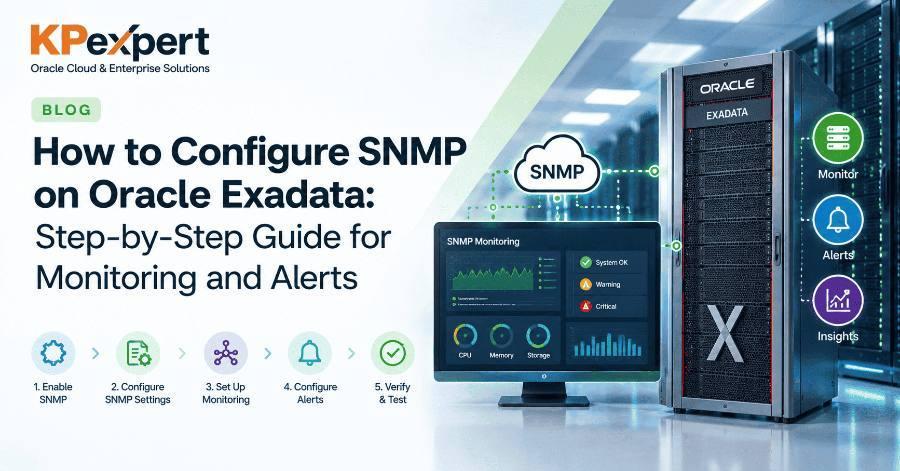
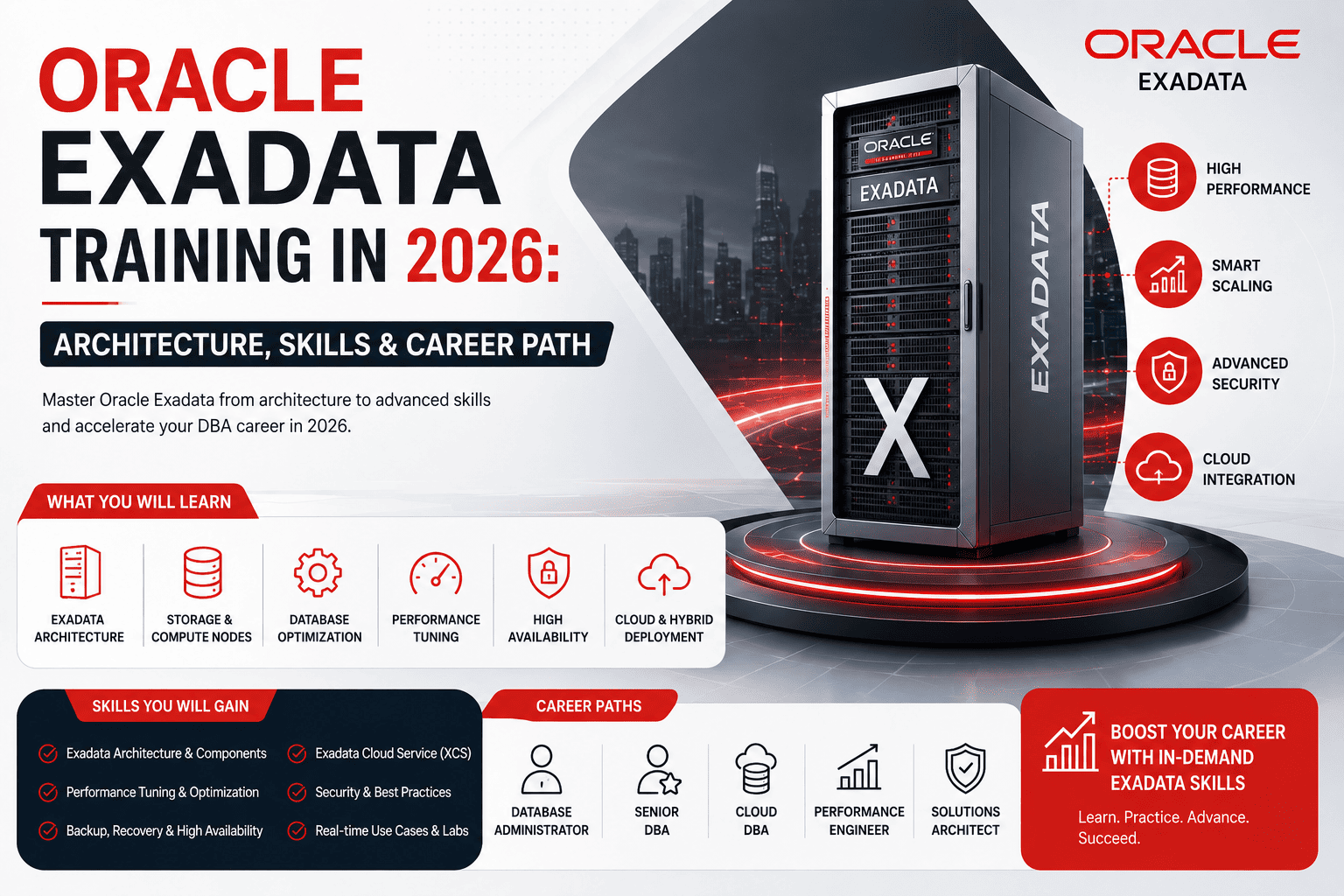
Oracle Exadata is an engineered system combining database servers, storage cells, InfiniBand or RDMA networking, and specialized software. It offloads SQL processing to storage cells, reduces I/O bottlenecks, and delivers predictable performance for Oracle Database workloads.
Core components include:
- Database servers (compute nodes)
- Exadata storage cells with flash cache
- High-speed interconnect fabric
- Exadata-specific software (cell servers, smart scan, HCC)
Unlike generic servers, Exadata is designed end-to-end for Oracle workloads, making deep platform knowledge essential for administrators.
Why Exadata Skills Matter in 2026
1. Enterprise Data Warehouse Consolidation
Organizations continue consolidating multiple databases onto Exadata to reduce licensing footprint and operational overhead. DBAs who understand consolidation planning and resource management are highly valued.
2. Performance Tuning at the Platform Level
Exadata tuning involves:
- Smart scan and storage index optimization
- Flash cache and PMEM utilization
- Cell offload statistics analysis
- HCC (Hybrid Columnar Compression) strategies
3. Integration with RAC and Data Guard
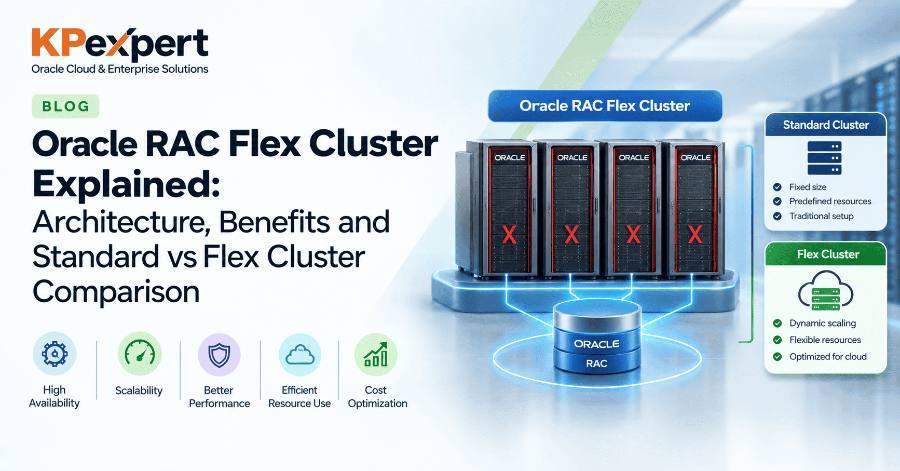
Most production Exadata deployments run Oracle RAC for high availability and Data Guard for disaster recovery. Exadata training complements RAC and Core DBA skills.
Skills Covered in Oracle Exadata Training
Architecture & Administration
- Exadata machine overview and networking
- Cell server administration and metrics
- ASM disk group management on Exadata
- Database deployment on compute nodes
Performance & Troubleshooting
- Interpreting cell alerts and Exadata-specific AWR sections
- Identifying smart scan inefficiencies
- Resolving interconnect and storage bottlenecks
- Patching and maintenance best practices
Who Should Take Exadata Training?
- Senior Oracle DBAs managing warehouse workloads
- RAC administrators supporting engineered systems
- Infrastructure engineers in enterprise data centers
- Professionals targeting Exadata specialist roles
Career Scope & Salary Trends
Exadata specialists often progress into roles such as Database Infrastructure Architect, Exadata Platform Engineer, or Senior DBA (Engineered Systems). Compensation typically exceeds general DBA roles due to the specialized nature of the platform.
Frequently Asked Questions
Is Oracle Exadata still relevant in 2026?
Yes. Many enterprises retain on-premise Exadata for latency-sensitive workloads while adopting cloud for other tiers. Hybrid strategies keep Exadata skills in demand.
Do I need RAC knowledge before Exadata training?
RAC fundamentals are strongly recommended, as most Exadata environments run clustered databases.
How long does it take to become proficient?
With structured hands-on labs and real-world scenarios, professionals typically build practical confidence within a few weeks of focused training.
Conclusion
Oracle Exadata training in 2026 positions database professionals for senior infrastructure roles. As enterprises optimize performance and consolidate workloads, engineered-system expertise remains a strategic career investment alongside RAC, OEM, and cloud skills.