Why Terraform is Essential for Modern DBAs in 2026
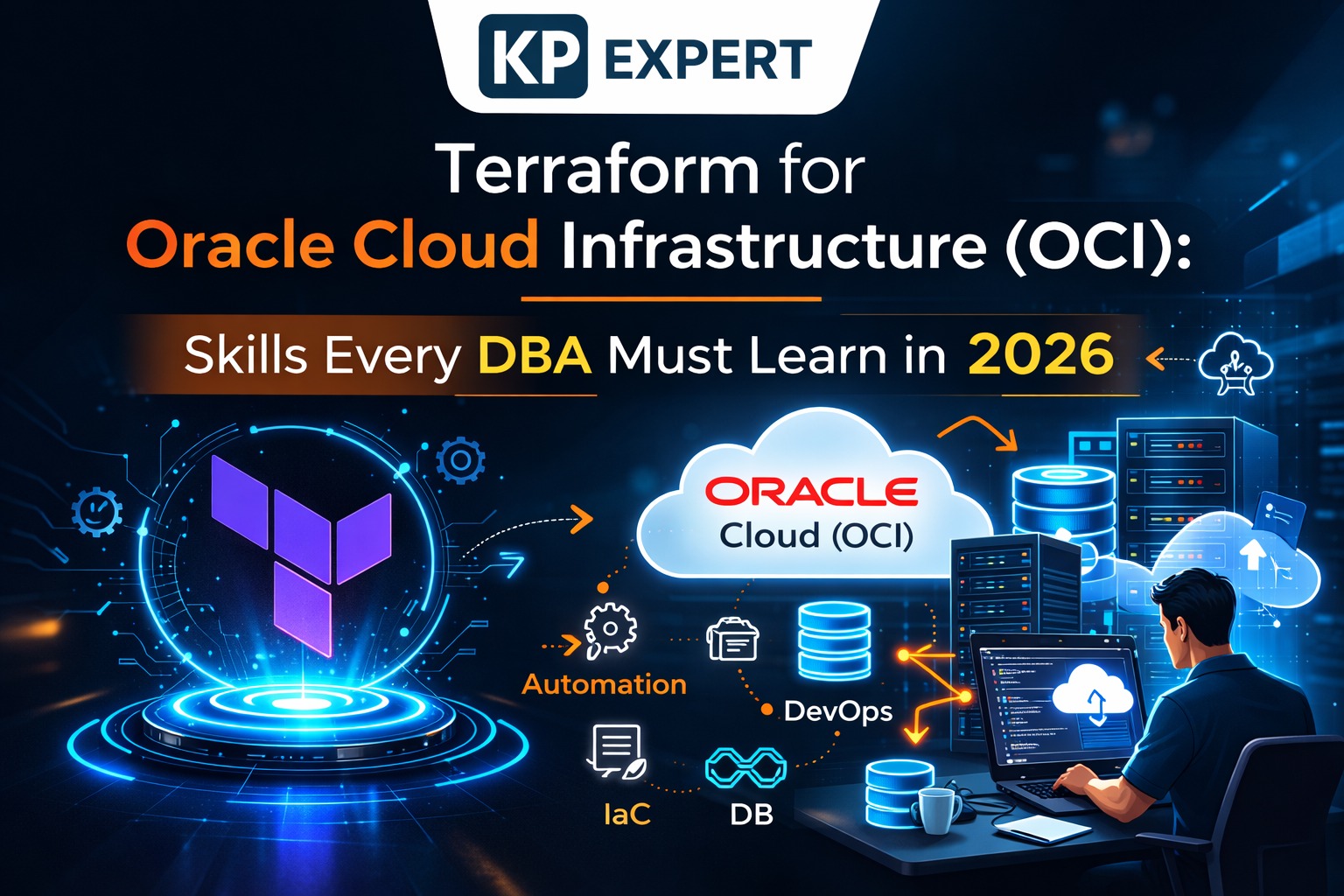
Cloud adoption is accelerating across enterprises, and Oracle Cloud Infrastructure (OCI) is becoming a strategic platform for scalable database and infrastructure management. Traditional Oracle DBAs can no longer rely solely on installation, tuning, and backup expertise. In 2026, automation, Infrastructure as Code (IaC), and DevOps collaboration define employability. One of the most powerful tools enabling this transformation is Terraform.
This guide explains why Terraform is essential for modern DBAs and how it supports career transition into Cloud DBA roles.
1. Why Traditional DBA Skills Are No Longer Enough
- Shift from on-premise to OCI
- Manual provisioning vs Infrastructure as Code
- DevOps integration expectations
- Automation-first enterprise environments
Enterprises are rapidly migrating from on-premise data centers to OCI for scalability, cost optimization, and operational agility. Traditional DBA roles centered around database installation, patching, and performance tuning. However, manual console-based provisioning is no longer sustainable in large-scale cloud environments.
Infrastructure as Code replaces repetitive configuration tasks with automated, repeatable deployments. Additionally, DevOps-driven enterprises expect DBAs to integrate infrastructure into CI/CD pipelines. Automation-first IT strategies demand scripting, governance awareness, and cloud architecture knowledge. DBAs who fail to adapt to automation tools like Terraform risk career stagnation.
2. What Is Terraform & Why It Matters for OCI
Terraform is an Infrastructure as Code (IaC) tool developed by HashiCorp that allows you to define cloud resources using declarative configuration files.
For Oracle professionals, Terraform integrates directly with:
- Oracle Cloud Infrastructure (OCI)
With Terraform, DBAs can automate:
- Compute instances
- VCN (Virtual Cloud Networks)
- Block storage
- Load balancers
- Autonomous Databases
- IAM policies
Instead of provisioning resources manually, DBAs can deploy entire OCI environments through reusable configuration files. This ensures consistency, reduces human error, improves governance, and accelerates deployment timelines. Terraform transforms DBAs from reactive administrators into proactive infrastructure architects.
3. How Terraform Improves Oracle Cloud Automation
1. Infrastructure as Code (IaC)
No more manual console-based configuration. Entire OCI infrastructure can be deployed using .tf files. Terraform standardizes deployments and ensures configuration consistency across environments.
2. Repeatable & Scalable Deployments
Same environment can be replicated across:
- Dev
- Test
- Production
This eliminates configuration drift and ensures reliability in multi-stage deployments.
3. Version Control Integration
Terraform configurations integrate with:
- Git
- CI/CD pipelines
Infrastructure becomes part of the DevOps lifecycle, improving collaboration and traceability.
4. Faster Disaster Recovery
In case of failure, complete environments can be recreated in minutes instead of hours, dramatically improving recovery objectives.
4. Essential Terraform Skills Every DBA Must Learn in 2026
Core Terraform Concepts
- Providers
- Resources
- Variables
- State files
- Modules
- Remote backend
These fundamentals enable structured infrastructure management.
OCI-Specific Knowledge
- Identity & Access Management (IAM)
- Networking (VCN, Subnets, Gateways)
- Compute provisioning
- Database service automation
Understanding OCI architecture ensures secure and scalable deployments.
DevOps Integration
- Git workflow
- CI/CD automation
- Infrastructure testing
Modern DBAs must align with automation pipelines and collaborative development processes.
5. Career Transition: From Traditional DBA to Cloud DBA
Old Role:
- Database installation
- Backup & recovery
- Performance tuning
New Cloud DBA Role:
- Automated OCI provisioning
- Infrastructure scripting
- Cloud security implementation
- DevOps collaboration
By 2026, companies prefer DBAs who understand OCI architecture, automation tools, and multi-cloud awareness. The Cloud DBA operates at both database and infrastructure layers, making automation proficiency a competitive advantage.
6. Certification Path for OCI + Terraform Professionals
Recommended Certifications:
- OCI Foundations
- OCI Architect Associate
- DevOps Professional
- Terraform Associate (HashiCorp)
Certifications validate cloud architecture knowledge, automation capability, and enterprise readiness. Combining OCI certification with Terraform expertise significantly enhances professional credibility.
7. Why Learning Terraform Increases DBA Salary
Industry Trend:
- Traditional DBA salary growth: Moderate
- Cloud + Automation DBA: Significantly higher demand
Organizations value DBAs who contribute directly to automation strategy. Terraform expertise reduces downtime, accelerates provisioning, and supports enterprise cloud migration initiatives. This positions professionals for higher compensation and strategic roles.
8. How This Connects to RAC, OEM & Core DBA Training
Terraform knowledge enhances:
- RAC cluster deployment automation
- Monitoring automation via OEM
- Hybrid cloud infrastructure management
Internal linking opportunities:
- Oracle RAC Training
- Oracle OEM Training
- Core DBA Training
- OCI Certification Course
Integrating Terraform with RAC and OEM training creates a comprehensive learning pathway from foundational DBA skills to advanced cloud automation expertise.
9. Who Should Learn Terraform for OCI?
- Oracle DBAs
- RAC Administrators
- OEM Professionals
- System Engineers
- DevOps Engineers
- Freshers targeting Cloud DBA roles
As OCI adoption increases, automation knowledge becomes a baseline expectation. Professionals who proactively upskill gain long-term relevance in competitive job markets.
10. Final Takeaway
In 2026, automation defines employability. Terraform is not just a DevOps tool—it is a career accelerator for Oracle professionals. DBAs who master OCI automation gain relevance, certification advantages, and leadership potential in cloud infrastructure projects.
The ability to provision and manage infrastructure through code differentiates modern DBAs from traditional administrators. As enterprises continue expanding cloud investments, automation expertise ensures sustainable career growth and higher earning potential.